California drivers should treat the immigration explanation for auto premiums as a political shortcut, not as a rate-filing theory. The documented record is narrower and more useful: Insurance Journal reported June 19, 2026 that Trump credited immigration enforcement with lower car-insurance premium growth, while experts said the premium swing was driven mainly by pandemic-era driving patterns, repair costs and supply-chain pressure. The market interpretation is that California carriers are still pricing claim severity, repair complexity, regulatory timing and their own book results. Immigration status is not the pricing lever that explains the premium cycle.
The Filing Record Points Somewhere Else
A California auto premium is not set by a campaign claim. It moves through a rating plan, an actuarial filing and a regulator. California Insurance Code section 1861.02 requires auto rates to begin with driving safety record, annual miles and years of driving experience, plus other approved loss-related factors. That does not mean every household with the same car gets the same bill. It means a carrier must connect its pricing to approved rating variables and loss evidence, not to a broad political category.
That is the first documented fact. The interpretation is about carrier behavior. When a carrier believes repair costs, injury costs or total-loss economics have outrun the premium it can collect, the carrier's practical answer is a filing, a rule change, a class-plan revision, a tighter appetite for new business, or some combination. When the carrier believes its book has become more adequate, it can compete harder or reduce selected rates. Either way, the signal comes through filings and renewals, not through a national explanation that skips the actuarial record.
California Makes The Pricing Argument Public
The California system is especially visible because prior approval turns carrier requests into public paperwork. CDI says property and casualty rate applications must be filed electronically through SERFF and that WARFF gives public access to rate and form filings. A driver does not need to read every exhibit to understand the implication: carriers have to show their work before approved rates reach policyholders.
The timing matters as much as the filing itself. CDI's review page says prior-approval auto filings move through basic-compliance review, public notice, department review and potential hearing steps. A request is not a bill. It can be challenged, amended, delayed, approved, deemed approved under the process, or implemented on future effective dates. That review structure helps explain why California drivers can feel premium movement later than drivers in less restrictive states: the cost pressure builds first, then the approved rate plan catches up.
The Rates Guy read is that this timing makes simplistic blame more tempting and less accurate. If a renewal arrives after a long review cycle, it can feel like a sudden new cause. In reality, the approval may be a delayed response to old loss experience. The documented process does not prove every increase is justified. It does prove that the premium effect has to be argued in a filing record.
Claims Cost Is The Better Market Signal
The strongest premium signal remains what claims cost after a crash. Triple-I's auto statistics page separates premiums, losses, claim frequency and claim severity, defining severity as the size of the loss. That distinction matters. A carrier can face fewer claims and still need more premium if the claims that remain are more expensive. A carrier can face stabilizing average premiums nationally while still asking California regulators for a specific book correction.
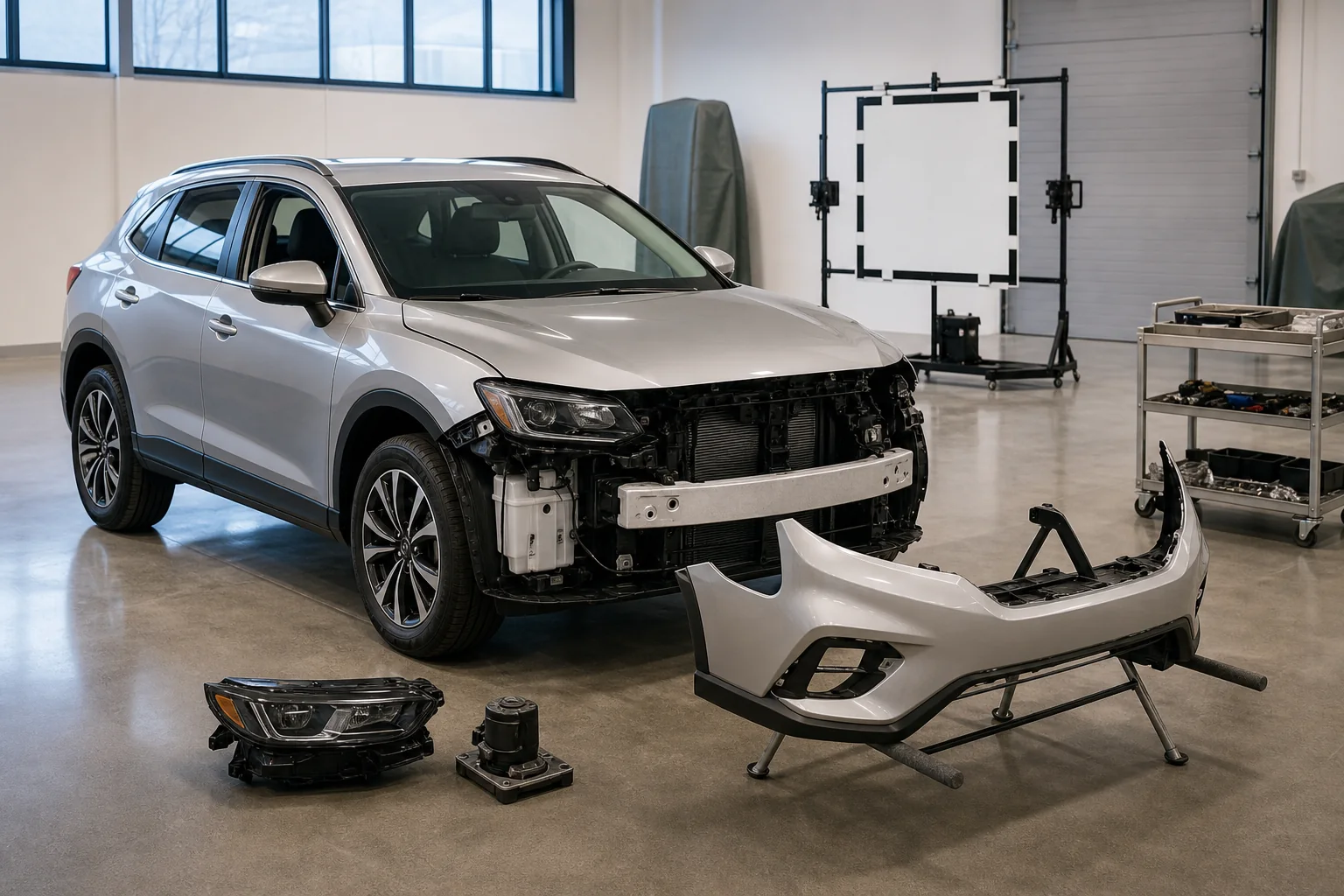
Repair economics have changed the way carriers think about physical damage. Sensors, cameras, calibrations, parts availability, labor availability and total-loss decisions all feed claim severity. CCC's Crash Course 2026 release says total-loss, bodily-injury and calibration trends are reshaping auto claims and repair economics. That source is national, not a California filing by itself, so it should not be used as a made-up California price forecast. It is useful because it describes the cost environment carriers cite when they explain why older rate levels no longer match current losses.
This is where documented facts and interpretation need to stay apart. Documented: claim severity, repair complexity and bodily-injury pressure are recognized industry issues. Documented: California requires prior approval and approved rating factors. Interpretation: a carrier that sees those costs in its California book will protect margin through rate filings, underwriting appetite, discount changes or rule revisions. That interpretation can be tested against filings; the immigration shortcut cannot do the same work.
Uninsured Exposure Is Real, But Narrower
There is a legitimate insurance question around uninsured motorists. An uninsured at-fault driver can shift costs to an insured driver's uninsured-motorist or underinsured-motorist coverage, and those losses can become part of a carrier's California experience. California Vehicle Code section 16020 requires drivers and vehicle owners to establish and carry evidence of financial responsibility. Compliance gaps therefore matter for premiums.
But that is not the same as saying immigration explains the broad premium cycle. The Insurance Journal account noted expert disagreement with that leap, and California's rating framework already focuses the rate plan on driving record, mileage, driving experience and approved risk factors. A carrier can price uninsured-motorist experience when the data support it. It still has to show how that coverage line performed, whether severity changed, and whether the requested rate effect belongs in the approved plan.
For drivers, the distinction is practical. If uninsured-motorist coverage is getting more expensive, the answer is to review limits, compare the coverage line, and ask the agent what changed. It is not to assume that a national immigration claim explains the entire renewal. A filing-supported cost shift is an insurance issue. A broad causal claim without carrier-level evidence is a political story.
What Carrier Behavior Will Look Like
Carrier behavior in this environment is likely to be uneven. Some companies may ask for rate because their loss experience still runs hot. Some may revise rules, symbols or class plans to price vehicle and driver differences more precisely. Some may pull back on segments where approved rates lag expected losses. Others may compete if prior filings have restored adequacy. None of those moves requires a statewide premium prediction.
CDI's own filing infrastructure shows how operational the process has become. CDI's prior-approval information page points filers to current applications, templates, the PARA portal and updated rate-return materials. That is not just administrative housekeeping. It is the channel through which carriers translate market pressure into approved pricing. A carrier that wants more premium has to package evidence. A carrier that wants to change segmentation has to put the mechanics into the system.
The best reading for California drivers is therefore answer-first and evidence-first: premiums are being shaped by claims costs and the filing calendar, with uninsured exposure as a specific coverage input. Immigration status is not a credible master variable for the California auto market. When the next renewal lands, the useful question is whether your carrier's approved plan still prices your household competitively.
Compare your California auto renewal before the next filing cycle decides how your carrier prices the risk.